
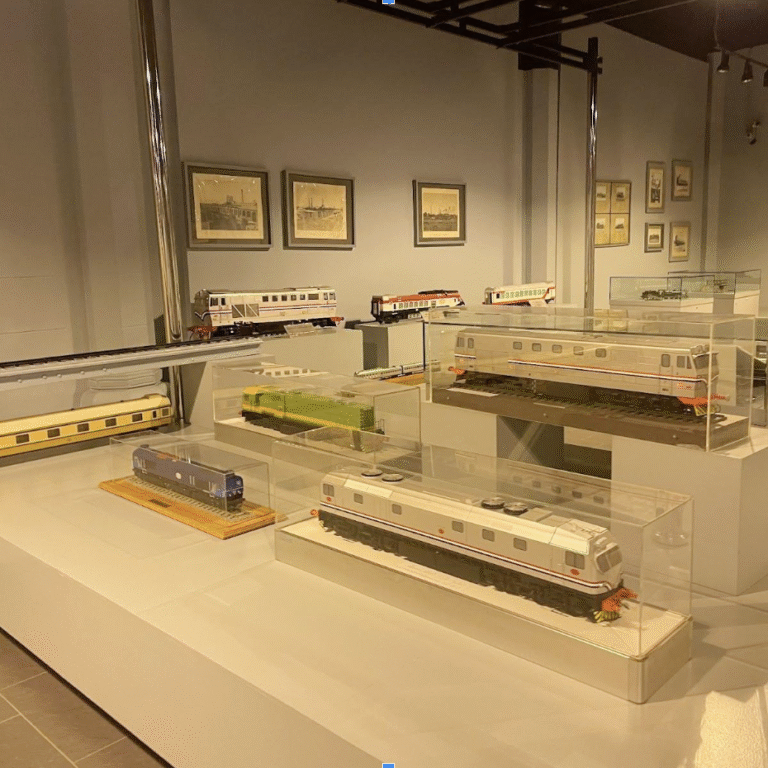
“Oh locomotive, tell me where you’re going… Oh locomotive, tell me where you traveled from… Oh locomotive, tell me… You keep running north and south… You go down a valley, you go up a bridge… Turn once and then go straight… Won’t you say, oh locomotive, where you’re going”. This is what Mohamed Abdel Wahab sang as he marveled at the train, or the “Wabour” (locomotive) as Egyptians used to call it because it ran on steam in the beginning.
From the day the train appeared, it has had a clear impact on the imagination of Egyptians, and this made it appear in Egyptian literature, cinema, and songs. We will find many poems written about the train, using it as a metaphor to express many feelings, just as we will find many novels whose events take place in the train and its world, like the novel “The Train Driver” by Naguib Mahfouz and other novels and stories.
The train carved an important path for itself in Egyptian songs. We find the song “Oh Locomotive, Tell Me Where You’re Going” by Mohamed Abdel Wahab that we started with, and we also find Farid al-Atrash’s song “Oh Traveler for a Day and a Night,” and many other songs like Afaf Radi’s “Oh Locomotive of 12 O’clock” and Mohamed Rushdi’s “Train of Life”. The train also found a place in children’s songs through the song by Abdel Moneim Madbouly and Hoda Sultan “Toot Toot, a Tiny Train,” in which a rhetorical image was drawn for the first tram that arrived at its sleeping station, saying: “This is the first train to sleep in houses”. The train continued its journey in modern songs as well, like Hamza Namira’s song “The Train” in which he describes the train: “You don’t wait, oh train… for those who didn’t come, oh train… and there’s no place in you for anyone to ride for free… and look, life has passed with you,” reflecting how Egyptians see the train as a metaphor for continuous fast movement that a person must try to keep up with. There are also expressions like “he missed the marriage train” or “he missed the train,” meaning the person was not able to catch a dream or a goal they wanted to reach.
As for Egyptian cinema, the train had a pivotal role. We all have stories and perceptions about the train from cinema alone. The train was present in cinema either when the whole movie takes place inside the train and its world, like the movie “Al-Mansi” (The Forgotten) by Sherif Arafa, starring Adel Imam and Yousra, or the movie “Batal min Waraq” (A Paper Hero) by Nader Galal, starring Mamdouh Abdel Alim and Athar Al-Hakim. At other times, the train played a leading role in important scenes in other movies, like “Doa al-Karawan” (The Nightingale’s Prayer) by Henry Barakat, starring Ahmed Mazhar and Faten Hamama, and “Al-Horoub” (The Escape) by Atef al-Tayeb, starring Ahmed Zaki and Hala Sedki. And we cannot forget Youssef Chahine, who presented different faces of the train in his films. We find an embodiment of the train world in “Bab al-Hadid” (Cairo Station) starring Farid Shawqi and Hind Rostom, and he also presented to us the third-class carriage in the Upper Egypt train “Al-Terso” in his film “Inta Habibi” (You Are My Love) starring Farid al-Atrash and Shadia. Chahine also presented the train in a major scene in the film “Al-Ard” (The Land), and he also presented the film “Sayyidat al-Qitar” (Lady of the Train) starring Laila Mourad.
We can say that the train affected the psyche and art of Egyptians greatly, and its impact is still continuous and renewed, and we are still asking with Abdel Wahab:
Won’t you say, oh locomotive, where you’re going… Oh locomotive, tell me… You brought a stranger near and took a relative away… And you brought a lover together with a lover… Coming near is destiny and going away is destiny… Won’t you say, oh locomotive, where you’re going.