
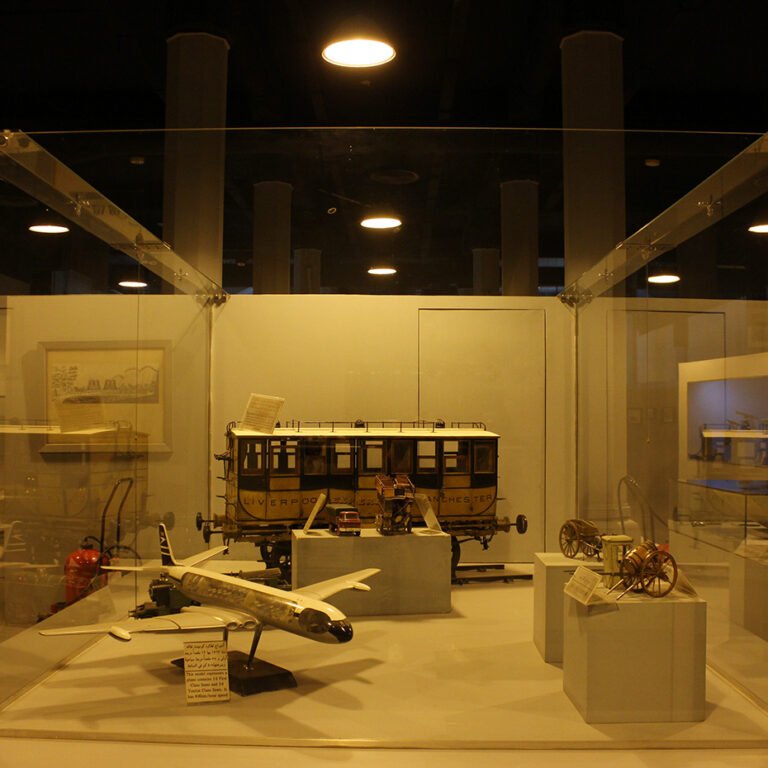
In the book “Advice for Travelers by Land,” directed to tourists on their journey from Cairo to Alexandria during the time of Ruler Muhammad Ali, we read: “The traveler may take one of these three paths from Alexandria to Cairo: the Rosetta and Delta path on the backs of donkeys, the desert path by camel, or the Nile path by riverboats; the last path is the cheapest and least exhausting”. Therefore, when the train appeared, it had no competitors. However, this situation changed quickly. Motorized water transport units with their mechanical barges appeared, and on the other hand, cars appeared suddenly, followed by companies organizing the transport of passengers and goods by trucks.
As a result, railway revenues between 1929 and 1933 decreased significantly. But at that time, an Egyptian engineer named Mahmoud Pasha Shaker took over as head of the Railway Authority. He had a different view on the competition between modern means of transport, seeing it instead as an opportunity for integration between them. He worked on organizing the transport of goods between the railway and trucks by stopping the licensing of truck movement except within the limits of one province and setting the maximum load for these trucks at only six tons.
He also encouraged truck transport companies to use the railway to transport their goods by granting them discounts on freight charges. He began testing a “door-to-door transport” system between Cairo and Alexandria in June 1933, which made it much easier to move goods, household furniture, and parcels from door to door, and from ships and trains to homes and vice versa.
In 1934, he organized passenger transport by dividing the country into zones and giving bus companies the right to use the road network in those zones. He had the Railway Authority take a 51% share in the capital of these bus companies to ensure they shared the profits and to protect its own revenues.
Later, airplanes appeared as a third competitor to trains, especially between Cairo and Alexandria, because their prices were close to first-class train fares, which attracted the wealthy. To face this competition, Shaker Pasha increased the speed of the express train that leaves in the morning from Cairo and Alexandria so it could cover the distance between the two capitals in two hours and forty minutes instead of three hours. He reserved this train for first and second-class passengers only and equipped it with luxurious carriages containing all comforts, like iced water, flower vases, tables, towels, and carpets.
He also encouraged summer vacationing by running trains to the sea two or three times a week from Cairo to Alexandria, Damietta, or Port Said at a reduced round-trip fare of 32.5 piasters. He introduced a joint ticket system between hotels and the railway for three, five, or seven days, which allowed these tickets to be used in all Egyptian summer resorts.
To encourage visits to the antiquities of Upper Egypt, he allocated trains in the winter to visit Luxor once or twice a month. These trains were equipped with beds for sleeping, so the total cost of the trip did not exceed 200 piasters, including round-trip travel, a three-night stay on the train, two days in Luxor, plus meals and fees for visiting the antiquities.
One of the fun initiatives launched by Shaker Pasha was the “Excursion Train” or “Surprise Train,” which operated only in the spring for a round-trip fare not exceeding 16 piasters. The destination of the train remained unknown to passengers until after it started moving. These trips were to Fayoum, Ismailia, or Suez, and the train would return with the passengers on the same day.
References:
Egypt and the Railways, Mohamed Amin Hassouna, Beit El Hekma Group for Cultural Industries, 2024.