
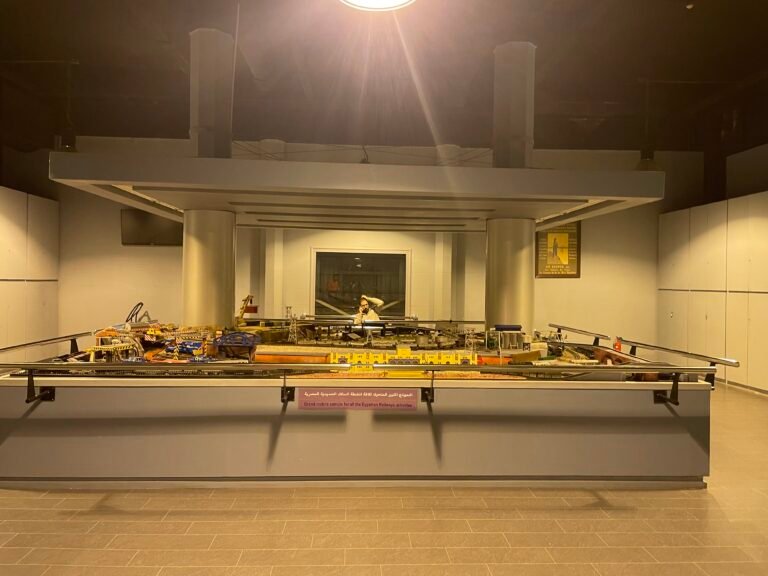
As we stand now before this diorama, we will feel as if we have immersed ourselves in the heart of railway history in Egypt; miniature trains glide on intertwined tracks, showcasing for us the journeys of past generations. These miniature locomotives, from the first steam locomotives to diesel and electric models, each one was part of a lifeline for a system connecting cities and villages in Egypt for more than a hundred years. But behind these machines lie the diligent efforts of railway workers, like engineers, technicians, station workers, and operators, who built and maintained this network to ensure its continued operation and development. The tracks and infrastructure intertwine through tunnels, extend over strong bridges, and reach bustling stations, reflecting the pulse and rhythm of daily life along the railway lines. Behind the rails, the natural scene reveals rolling hills, winding rivers, and vibrant cities, all reflecting the geographical diversity that Egyptian trains pass through every day. Lighting effects also add a vital dimension to the stations and streets, while automatic signals flash in sync with the movement of the miniature locomotives. Some parts of the model also pulse with life through trains and turntables to give us as visitors an idea of the precision that drives railway operations. This model is not just a display; it’s a window into the past and a celebration of the railway network that transported people, goods, and stories throughout Egypt for many decades.
The story doesn’t stop here, because Egypt is now undergoing an ambitious program to expand and modernize the railway network, with the aim of improving connectivity between cities and increasing efficiency and safety. One of the largest projects being implemented now is the high-speed train network project which will extend for a distance of 2,000 km, and will connect 60 cities through 3 main lines: the Green Line (Marsa Matrouh – Ain Sokhna), the Blue Line (Sixth of October City – Aswan), and the Red Line (Safaga – Luxor). There is also the monorail project in Cairo, which includes two lines connecting the New Administrative Capital to Cairo (54 km), and Sixth of October City to Giza (42 km). As for the Light Rail Transit (LRT) project, which will be the first electric line in Egypt, it will connect Cairo with new urban communities like Tenth of Ramadan City. In parallel with the expansion of the network, Egypt is also investing heavily in modernizing the railways and developing the train fleet; the Egypt National Railways Modernization Project (ENRMP) aims to develop signal systems, renew tracks, and implement Automatic Train Protection (ATP) systems, in addition to buying and introducing new models of trains to enhance reliability and service quality.
But these projects are not just limited to transport; they also represent a big shift in the concept of urban mobility, and their goal is to reduce congestion, promote sustainability, and reshape the way people interact with their cities. Just as the railway expansions in the 19th and 20th centuries contributed to shaping the development of Egyptian cities, the new projects will also define the features of the future and create new links between people, places, and opportunities. However, there is controversy and questions around these projects, especially regarding the size of the budget, government spending priorities, and the social groups that will benefit from them most. While high-speed trains and monorail systems provide modern and efficient means of transport, some see that the priority should be to improve the dilapidated infrastructure of the current railway network, which serves millions of passengers daily from the middle and poor classes. Therefore, achieving a balance between expanding modern transport means and the need to improve existing infrastructure, and ensuring that transport is available at an affordable cost for everyone, remains a big challenge and forms part of the ongoing discussion about the future of the transport system in Egypt.