
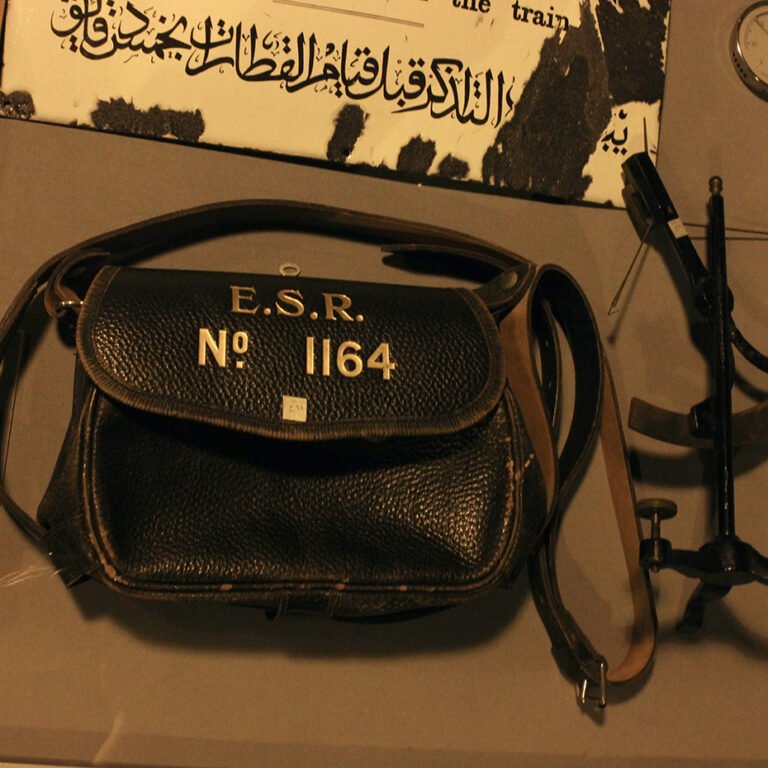
Just as the railway was modern technology that entered Egypt and facilitated the movement of passengers, crops, and goods between the provinces of the “Mahrousa,” this technology also created new jobs that did not exist before. This led to the emergence of a class of workers and technicians in Egyptian society, after the society’s division had been just farmers and “Afandiya” (officials/middle class). To manage this new working class, the matter was not limited only to specialized vocational education, building factories, and bringing materials, but there was also an entire life for railway workers, including the establishment of residential clusters and providing health, social, and entertainment services.
When movement and transport increased after World War I, there was a dire need to expand and modernize the railway factories. Therefore, the Railway Authority announced a competition to design a model worker city in Abu Zaabal, with the aim of providing a comfortable and healthy environment for the workers who would work in the new factories. Here came the role of the engineer Ali Effendi al-Meleigi Masoud, who presented his innovative design and won first place in this competition in 1934.
On one of the hot days in August, with the sun peeking through his office window, the engineer Ali Effendi al-Meleigi Masoud was looking at the drawings and designs spread across his desk. He knew that what he was doing wasn’t just drawing maps and designs, but he was also drawing the future of an entire generation of Egyptian workers. The city’s design included comfortable housing for engineers and employees—consisting of separate villas—and houses for workers with two, three, or four rooms. The design was not limited to housing only, but also included public facilities like a mosque, a school, a hospital, a police station, a fire station, and a cinema. There were also spaces dedicated to building a market and a sports club containing a football field, a tennis court, a swimming pool, gardens, and public parks.
Alongside the worker cities, there were also social and recreational services that railway workers and their engineers engaged in. Among these things was the football league for the railway departments. The league started in 1921, and the first season opened with 7 teams from the following departments: Locomotives, Signals, Stores, Auditing, Telephones, Engineering, and Telegraphs. In the first season, the Locomotives team won after winning 11 out of 12 matches and drawing one match without losing once throughout the season. In the second season of the league, two new teams joined: the Lighting team and the Post team. Although the league evolved in different forms, the Locomotives team kept the title in all seasons until the 1931/1932 season, when the Telegraph Department team finally won the league because the Locomotives team did not participate in that season.
The league was a very important and basic thing for all railway workers at all their levels and nationalities. To maintain the league and facilitate organizing its matches, the General Manager of the Railway issued a decision in 1922 allowing daily-wage workers in the railway to be absent from evening shifts to play in matches without anything being deducted from their wages, provided they weren’t absent more than 3 times a month.
The designs of the worker cities and the services integrated into them and the organization and implementation of the football league are examples of the features of the new working-class life formed in Egypt. The city of Abu Zaabal still exists today, a witness to the beginning of the working class in Egypt and its impact on Egypt’s urban and social fabric. This means that the railway was not just an engineering project, but it had a great impact on the lives of many people and contributed to the formation of generations of skilled workers who contributed and still contribute to building modern Egypt.
References:
- Egypt and the Railways, Mohamed Amin Hassouna, Beit El Hekma Group for Cultural Industries, 2024.
- Results of a design competition for workers’ housing and a city plan for them in Abu Zaabal, Egyptian Government Railways Magazine, Year 3, Issue 2, February 1934.
- A history of the E.S.R., T. & T. Football League, by L. H. Wade, Stores Department. Egyptian Government Railways Magazine, Year 3, Issue 5, May 1934.