
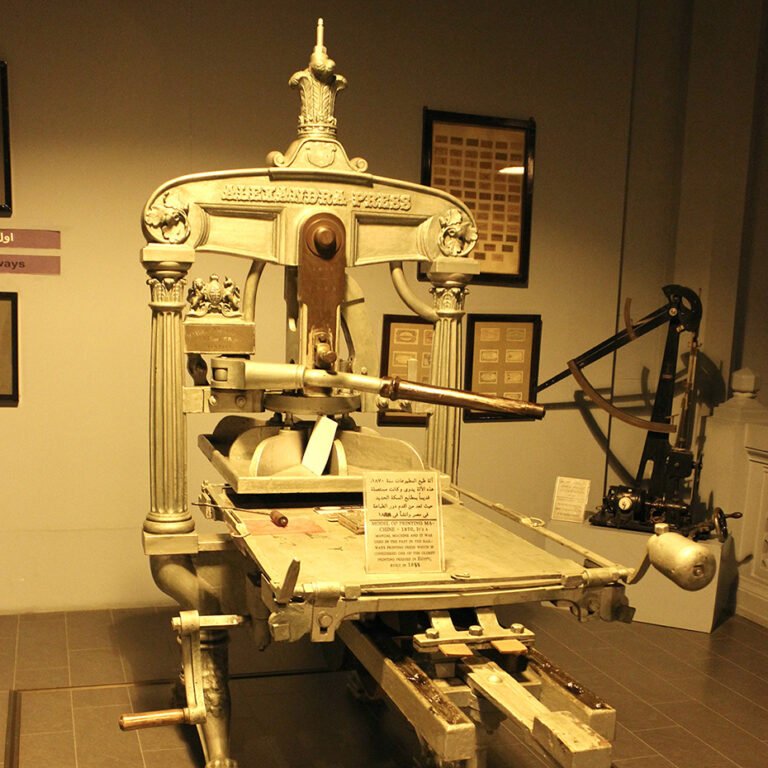
The Egypt Railway Printing House was established as part of the railway system that began in the middle of the 19th century. At first, the printing house existed to meet the needs of operating the railways, such as printing tickets, maps, booklets, instructions, and administrative documents. Over time, the role of the printing house expanded and it became a platform for producing scientific and cultural materials that contributed to promoting knowledge and documenting the social and economic transformations in Egypt.
The “Egypt Railway Magazine” was one of the important publications linked to the railway sector, and it had a big role as a platform for communication between workers and as a means for spreading technical and cultural knowledge related to operating railways in Egypt. The magazine began to be issued monthly in the 1930s and was a means for relaying news, updates, and achievements within the sector, and focused on highlighting workers’ efforts, showcasing new technologies, and also providing information about current or future projects.
The magazine contained articles on engineering, railway maintenance, and technological developments, with the aim of educating workers and promoting their professional development. It also provided a space for railway workers to write about their practical experiences and cultural and social interests. For example, we find an article about the football league for the Egyptian railway sectors, or we find an interesting interview with the “Royal House” driver telling his memories.
The magazine contributed to documenting the history and achievements of the sector and highlighted its pivotal role in economic and social development in Egypt.
The magazine was primarily directed at railway workers including engineers, administrators, and technicians, but its broader cultural content made it available to readers interested in infrastructure and the modernization process that was happening in Egypt. Although the magazine was a technical and administrative tool, its historical issues are considered valuable sources for researchers and historians studying industrial history, infrastructure, and culture in Egypt, because they document the large role played by the railway sector in shaping the modern state. For example, issues of the magazine were an important source for us in the research journey for this tour.
Beside the magazine, the printing house produced important books documenting the journey of railways in Egypt, like the book “Egypt and the Iron Roads” by Mohamed Amin Hassouna, which documented the history of the establishment of railways in Egypt and their development up to the 1930s. The printing house also published the book “Egypt’s Railways in 125 Years (1852-1977),” which documented the plans for developing and operating railways after the 1952 revolution.
The Egypt Railway Printing House played a major role in the Egyptian modernization project by producing documentation and cultural materials, and these publications contributed to documenting the history of railways in Egypt.
References:
Egypt and the Railways, Mohamed Amin Hassouna, Beit El Hekma Group for Cultural Industries, 2024.